Background & User Research Findings:
While our PK feature is an effective, goal-driven tool for promoting streamer growth, the current competitive landscape is imbalanced. Most active participants are above level 100, which gives mid- and low-tier streamers very limited chances of winning. This disparity discourages them from consistently using the PK feature. To address this, we're introducing Group PK. Our goal is to enable streamers to reach new audiences and foster cross-fan engagement through a team-based PK experience.
Main Metrics
1. Attracting new audiences: Increase the avg. viewer count per PK streamers by 3%.
2. PK usage rate uplift 3%
Observed MetricPK
1. Spend rate uplift 5%
User Flow:
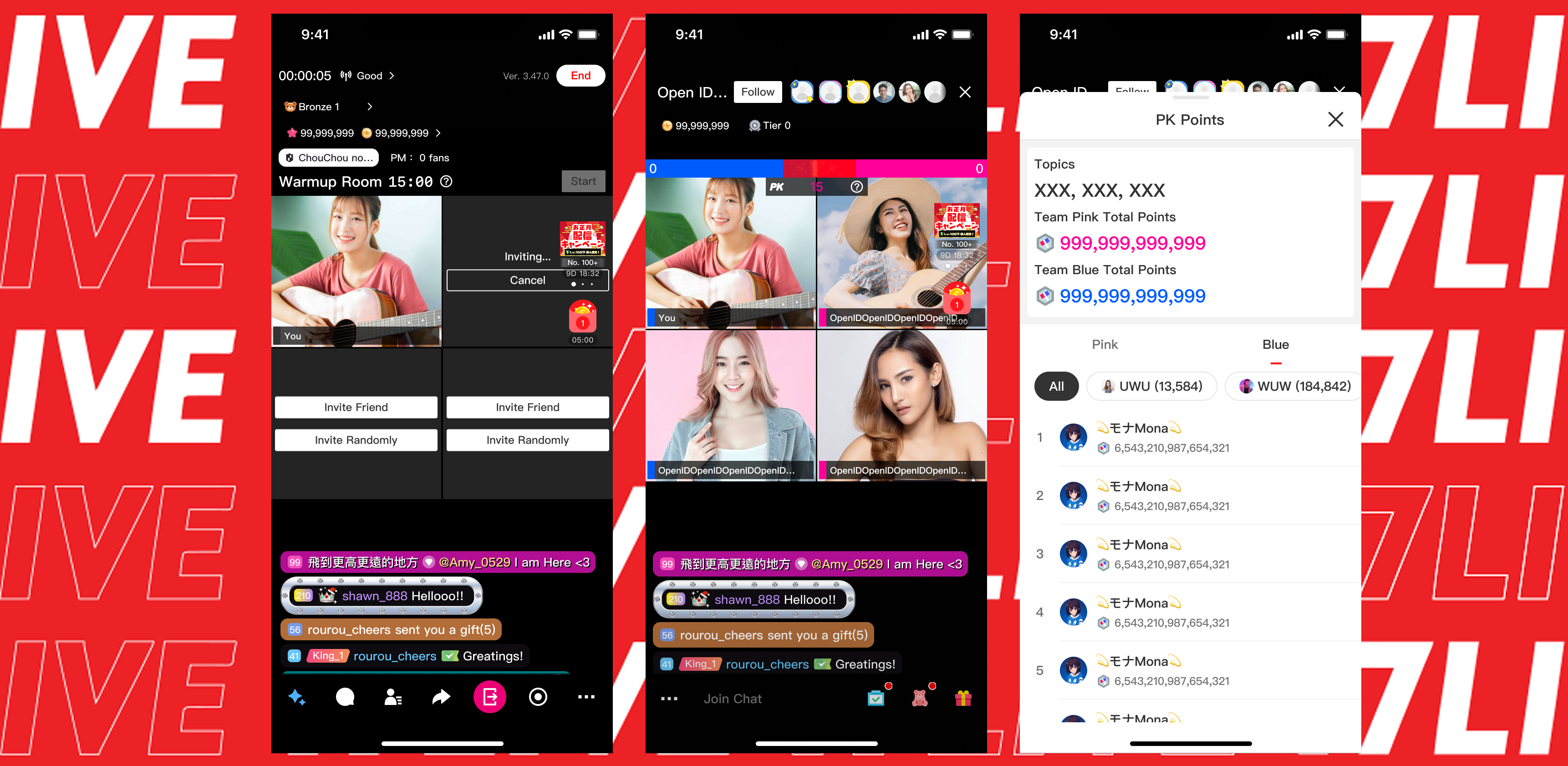
The main flow for a streamer to initiate and participate in a Group PK centers around a new Waiting Room mechanism.
1. Enter PK Mode
A streamer starts from their live room, goes to the VS panel, and selects the "4 players" option (which initially supports 2v2 Group PK).
2. Waiting Room & Invitation
The streamer (Host) is redirected to a Waiting Room, which is open for 15 minutes.
The Host invites the remaining three members to fill the four slots by either:
Inviting friends/streamers manually (Friend PK).
Matching with random opponents (Random PK).
3. PK Setup (Host Action)
Once the four slots are full, the Host sets up the match:
Mode: Defaults to Team Battle (2v2).
Team Formation: The Host can choose teammates to form two teams, or let the system randomly distribute all four members.
Duration: Set the length of the PK (e.g., 3, 5, or 10 minutes).
4. PK Battle
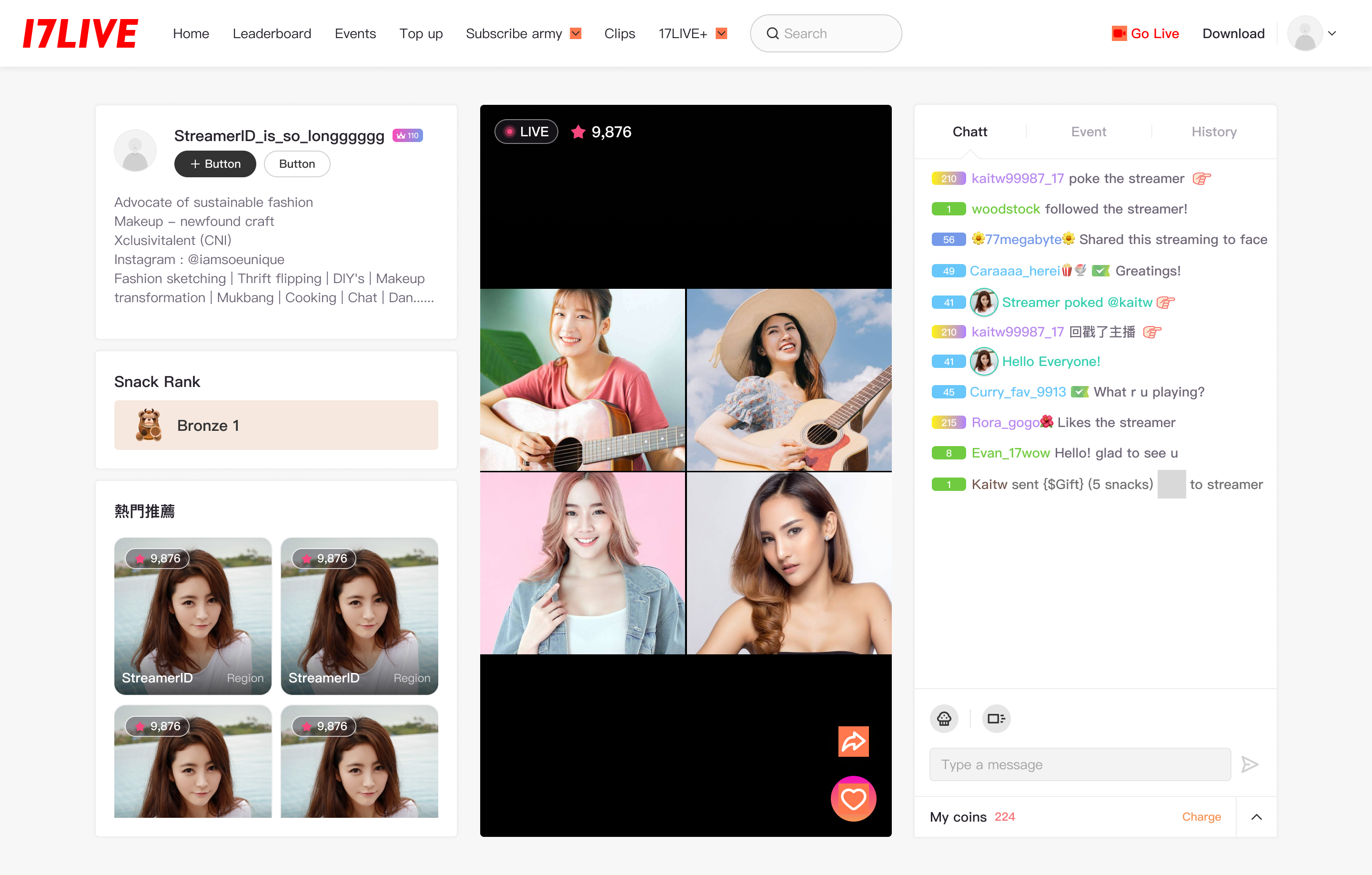
The battle begins with a countdown.
Scoring Rule: Viewers send gifts to individual streamers, and those points are added to the streamer’s team score. The team with the highest score at the end wins.
5. Result & Next Match
After the results animation is shown, all four streamers are redirected back to the Waiting Room.
The Host can choose to start a new Group PK with the same "previous settings" or set up a new match entirely.
Key Achievements:
1. I led the intellectual property strategy for the project's long-term roadmap, resulting in a Japanese Patent (No. 2025-283882) for an adaptive filtering mechanism. Although this feature was de-scoped for the initial launch to prioritize core stability, this patent secures the possibility our future ability to optimize context-aware content delivery and user safety during high-concurrency PK.
2. The new PK format is scheduled to launch in February 2026 across Japan, Taiwan, and Hong Kong, with a projected reach of 2,000 daily streamers and 37,000 daily viewers.